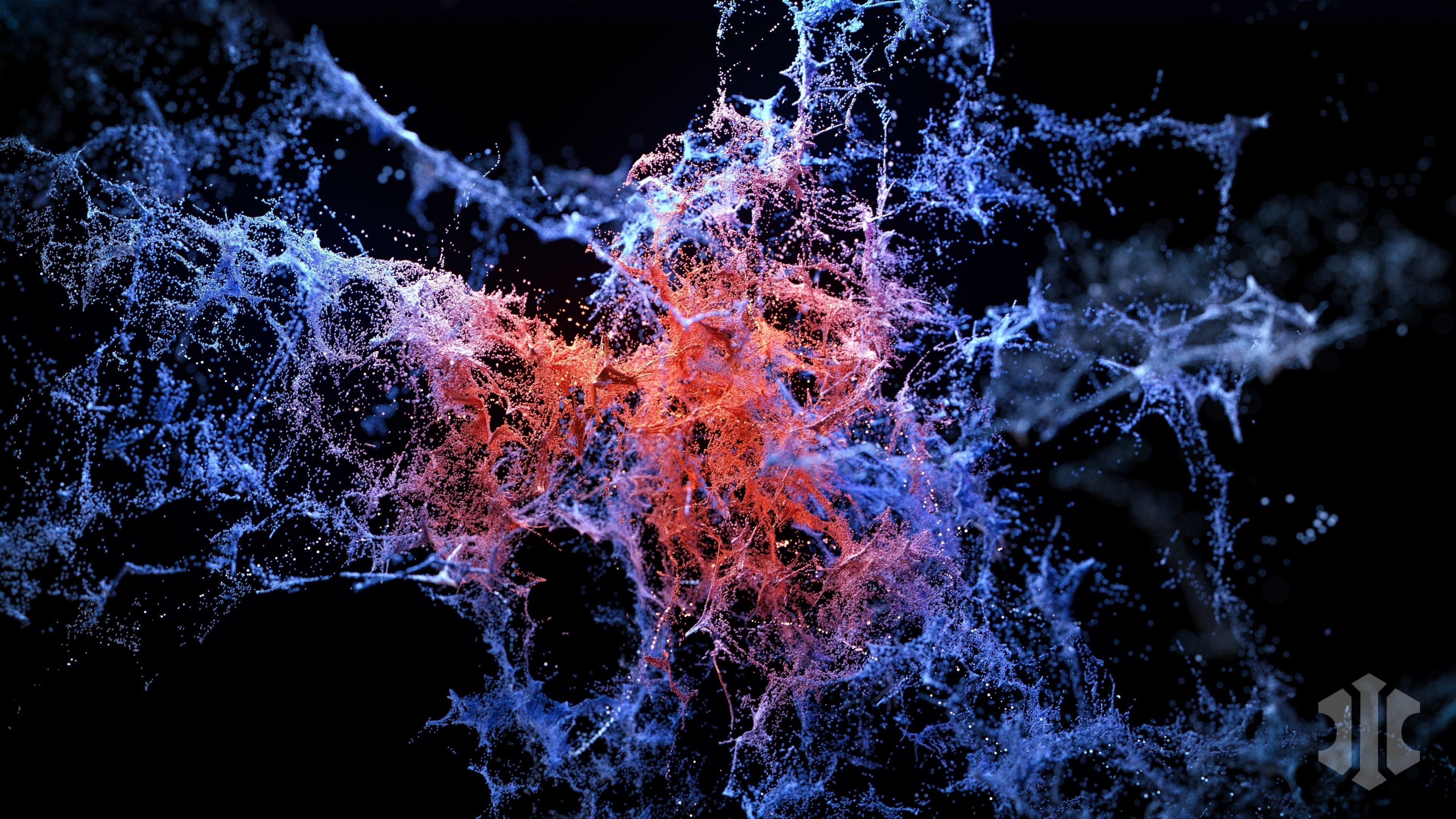
The release of INSYDIUM Fused 2025.4 introduces a rebuilt NeXus core that accelerates GPU simulation performance while reducing VRAM usage. The system handles particle and fluid data more responsively, and the update brings expanded mapping controls such as looping data channels and layered GPU falloffs that increase procedural flexibility. The changes shift NeXus closer to a general purpose GPU simulation framework inside the host DCC.
INSYDIUM develops simulation and animation technology that integrates directly into Cinema 4D. The company’s toolset is distributed as the Fused bundle, which contains NeXus for GPU accelerated simulation, X Particles for particle based workflows, Taiao for procedural vegetation, Cycles 4D for rendering and a series of utility modules for meshing, shading and scene structuring. The suite provides an internal alternative to standalone solvers by keeping particle effects, smoke, fire, fluids, meshes and procedural animation inside the Cinema 4D environment without external roundtrips.
What Is New In Fused 2025.4
Fused 2025.4 introduces a rebuilt NeXus core that increases GPU simulation speed and reduces VRAM usage. The update improves responsiveness during heavy particle or fluid work and adds expanded mapping controls such as looping channels and layered GPU falloffs. These changes make the system more suitable for complex effects work where simulation data needs to be adjusted repeatedly without long rebuild times.

Expanded GPU Smoke, Fire And Liquid Simulation
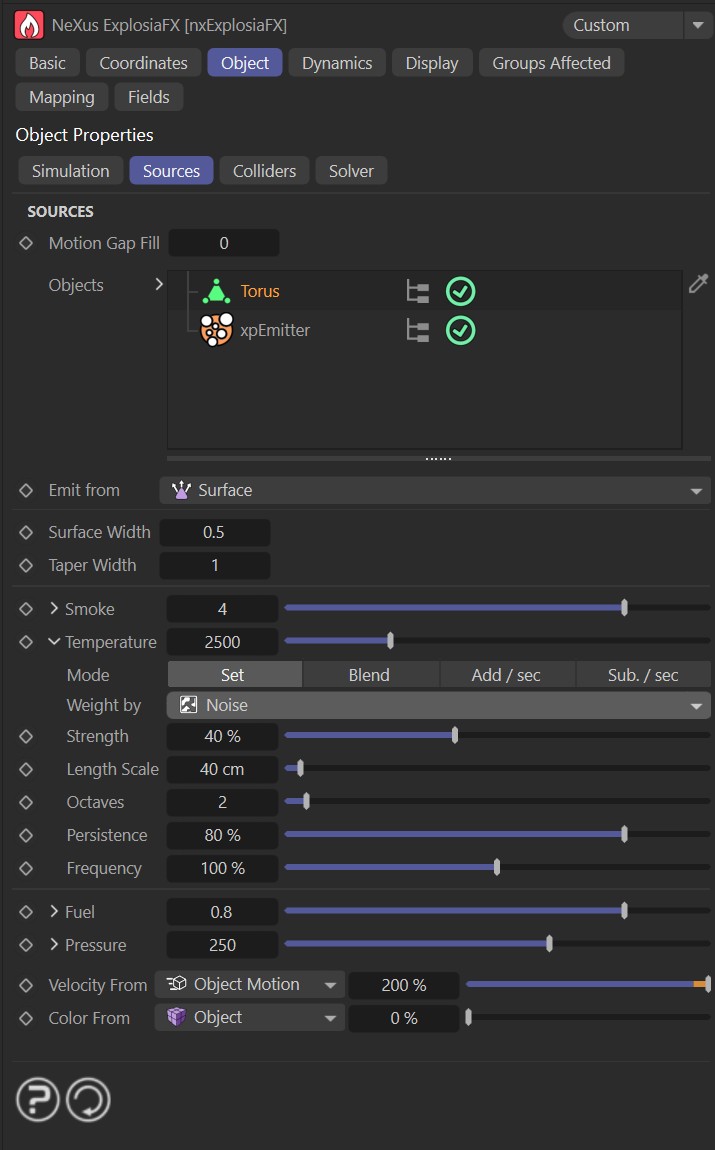
Several new solvers extend NeXus into full smoke, fire and liquid simulation. nxExplosiaFX processes smoke and fire entirely on the GPU and can emit from meshes, splines, vertex maps, shaders or particles. The system supports layered emitters, collision objects and forces, while the viewport can display volumetric previews and diagnostic information that assists with look development.
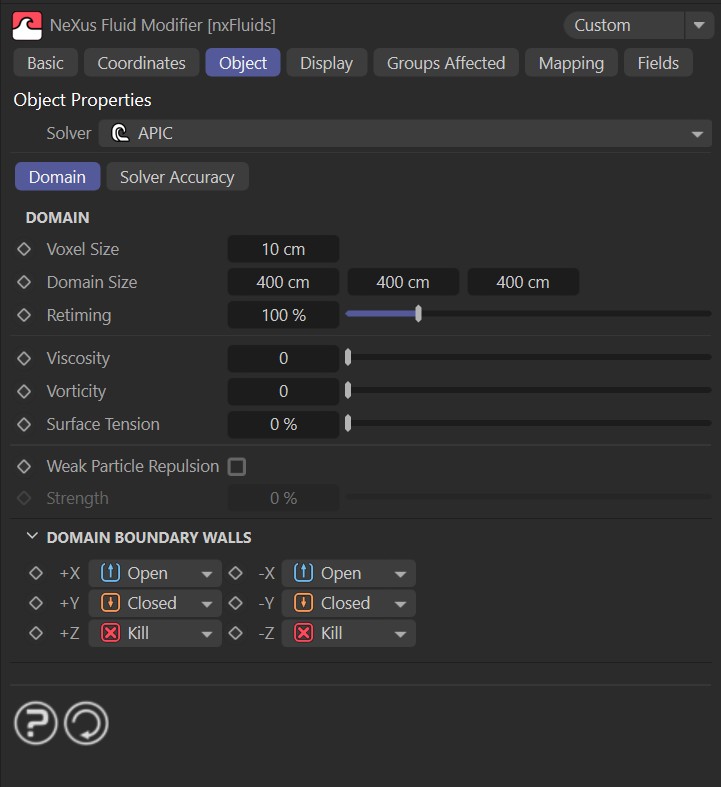
nxFluids adds FLIP and APIC based liquid solvers that handle varying viscosity, thin liquid sheets and surface tension features with improved stability. These solvers respond well to high velocity motion and produce more predictable shapes in turbulent scenes. For converting simulations into renderable geometry, nxMesher produces mesh surfaces with reduced temporal flicker. It supports multiple mesh profiles, layered smoothing and the transfer of simulation attributes such as colour, velocity or emitter identifiers into the resulting geometry. Foam and spray handling moves to a new system under nxFoam, which provides more stable behaviour in fast moving flows. nxSplash introduces a procedural method for generating crown splash shapes for shots that need controlled impact elements.
Layer Based Modifier Workflow
NeXus modifiers now operate through a layer based workflow that consolidates several behaviours into single modifiers. Formerly separate nodes for turbulence, motion offsets, directional changes or scaling can now be stacked inside a unified container. The workflow reduces the complexity of particle setups and improves clarity in scenes that rely on multiple behavioural adjustments. Several modifiers receive technical refinements. nxDirection gains more precise control for stream shaping and vortex behaviour. nxFollowGeo adds multi spline support and new guide and force modes that improve geometry following in both smooth and turbulent contexts.
Jidou Brings Procedural Animation
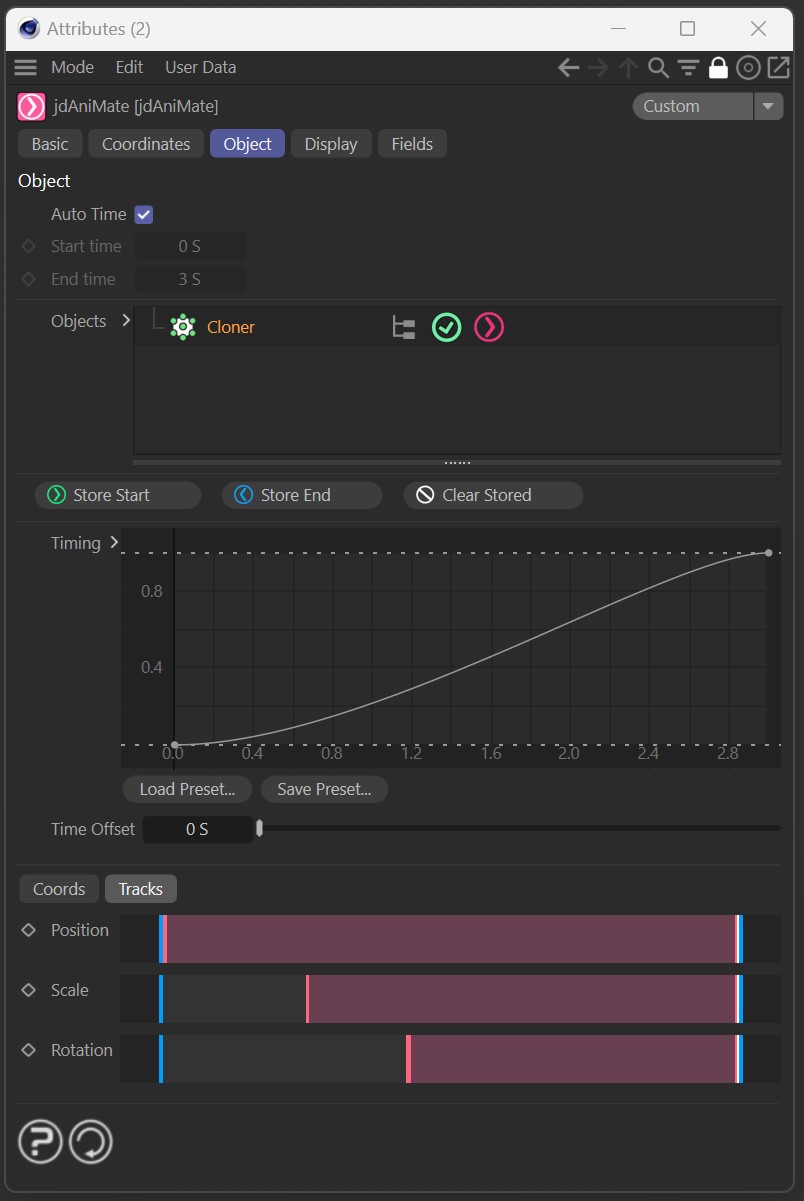
Fused 2025.4 introduces Jidou, a procedural animation toolkit designed for clones, hierarchies and technical setups. jdAniMate manages start and end PSR states with detailed timing adjustments. jdDriver links arbitrary parameters to create dependency based rigs. jdFlowCam generates structured camera paths with holds and timed motions. jdGeoFlow creates procedural curves that can drive object deformation or placement. jdGeoRoll simulates rolling behaviour with gravity and collision handling for mechanical or motion graphic tasks. Jidou serves as a parallel system to simulation work, covering the areas where predictable procedural motion is required.
Production Considerations
NeXus simulations continue to run on a single GPU. Distributed or team rendering cannot offload simulation data because the processing remains tied to the local GPU. Systems running Windows may require TDR timeout adjustments during long simulation sessions to prevent GPU resets. NeXus requires a GPU with Vulkan support and a minimum of 4 GB VRAM. Performance scales with newer GPU architectures and should be evaluated in context of scene complexity.
P.S. On their site, you’ll find the 4K Wallpapers gallery – https://insydium.ltd/community/4k-wallpapers/ , and I’ve been using the “Flip Particles” for a while on my PC. Worth a look!